Solar Installation Services in Pakistan: 2026 Homeowner’s Guide
Choosing the right solar installation services in Pakistan is the single biggest factor in whether your rooftop system saves you money for the next 25 years or becomes an expensive headache. With grid tariffs climbing again in 2026 and load-shedding still a daily reality in many cities, thousands of homes in Lahore, Karachi, Islamabad, and Faisalabad are switching to solar. This guide walks you through the full installation journey, from site survey to net metering, so you know exactly what a good installer should deliver.
Solar is a long-term commitment. The panels are only half the story. The design, mounting, wiring, and after-sales support decide how much energy you actually harvest. Let us break the process down step by step.
Why Professional Solar Installation Services Matter
A solar array is a live electrical system bolted to your roof and tied into the national grid. Poor workmanship causes weak yields, water leaks, and even fire risk. Professional installers handle structural loading, earthing, and surge protection correctly the first time.
Pakistan’s regulator, the National Electric Power Regulatory Authority (NEPRA), sets the net-metering framework that lets you sell surplus units back to the grid. Only a qualified team can prepare a compliant single-line diagram and secure your net-metering licence without delays.
The cost of cutting corners
Cheap, unvetted crews often skip proper cable sizing or use undersized inverters. The result is voltage drop, tripping, and lost generation during peak summer hours exactly when you need power most. Spending a little more on experienced solar installation services protects both your investment and your safety.
The Solar Installation Process Step by Step
Every quality install follows a clear sequence. Knowing it helps you hold your contractor accountable at each stage.
- Site survey and load audit. The team measures your monthly units, roof area, shading, and orientation to size the system correctly.
- System design. Engineers produce a layout, string plan, and single-line diagram matched to your consumption.
- Proposal and approval. You review panel brands, inverter type, warranty terms, and the net-metering timeline.
- Structure and mounting. Galvanised or aluminium rails are fixed with correct tilt for your latitude.
- Electrical work. DC and AC wiring, earthing, surge protection, and inverter commissioning.
- Net metering. The installer files your application with the distribution company and NEPRA.
- Handover and monitoring. You get app-based monitoring and a maintenance schedule.
How long does it take?
Physical installation of a typical 5kW to 10kW home system takes two to four days. Net-metering approval can add four to eight weeks depending on your DISCO, so start the paperwork early.
Sizing Your System Correctly
Oversizing wastes money; undersizing leaves you buying expensive grid units. Use your past twelve months of bills to find your average daily consumption, then let the installer model seasonal swings. Summer air-conditioning loads in Pakistan can double a household’s demand.
The table below gives a rough starting point for common home sizes in 2026.
| System size | Typical daily output | Best for | Approx. roof space |
|---|---|---|---|
| 5 kW | 20–25 units | Small home, 1–2 AC units | 300–400 sq ft |
| 10 kW | 40–50 units | Medium home, 3–4 AC units | 600–800 sq ft |
| 15 kW | 60–75 units | Large home or small office | 900–1,100 sq ft |
| 20 kW+ | 80+ units | Commercial / farmhouse | 1,200+ sq ft |
Choosing Equipment That Lasts
Tier-1 panels and reputable inverters cost more upfront but deliver better degradation curves and warranties. According to the International Renewable Energy Agency (IRENA), global solar costs have fallen sharply over the past decade, making premium hardware more affordable than ever in 2026.
- Panels: Look for Tier-1 mono-PERC or N-type modules with a 25- to 30-year performance warranty.
- Inverter: Match capacity to your array and choose hybrid if you plan to add batteries later.
- Mounting: Corrosion-resistant rails rated for local wind loads.
- Cables and protection: UV-rated DC cable, proper fusing, and surge arresters.
Warranties worth reading
There are three separate warranties: product, performance, and workmanship. The installation warranty is the one most buyers forget, yet it covers leaks and mounting faults. Insist on it in writing.
Finding the Right Installer in 2026
Pakistan now has hundreds of solar companies, and quality varies widely. Shortlist firms with AEDB certification, a verifiable portfolio, and in-house engineers rather than subcontracted labour. Working with the best solar company in Pakistan means you get accountable design, genuine components, and real after-sales support.
Ask neighbours for references and visit a completed job if you can. Choosing reliable local experts who know your city’s DISCO procedures will smooth the net-metering process and reduce surprises.
A practical tip from real installs
Before signing, ask for a shading analysis across the whole day, not just at noon. A single nearby water tank or neighbour’s wall can shade one string for hours and quietly cut your output by 15 percent. Good installers reposition panels or use optimisers to solve this.
Maintenance and Monitoring After Installation
The job is not finished when the system switches on. Solar hardware is low-maintenance, but it is not no-maintenance, and Pakistan’s dust and summer heat make routine care worthwhile.
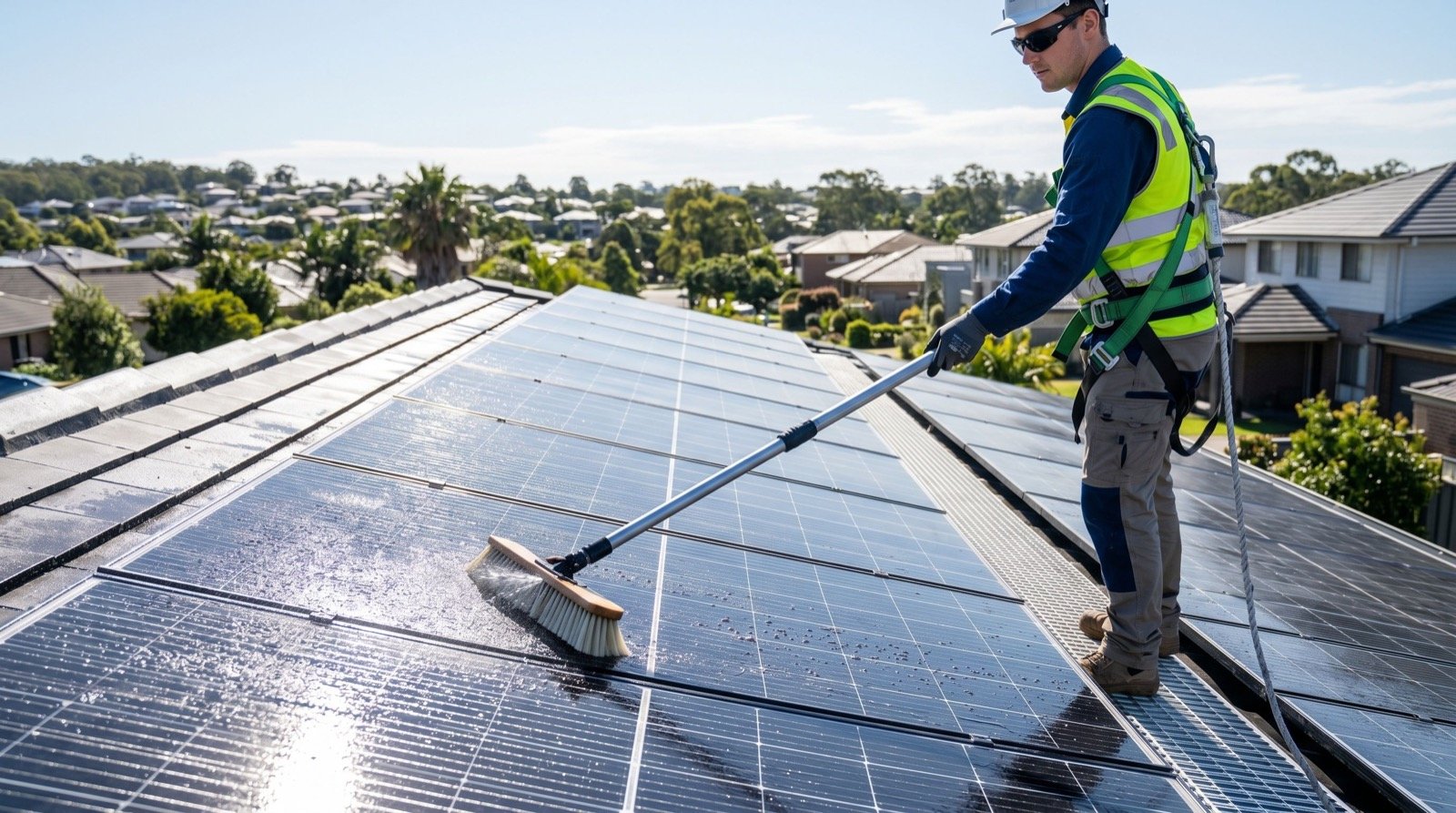
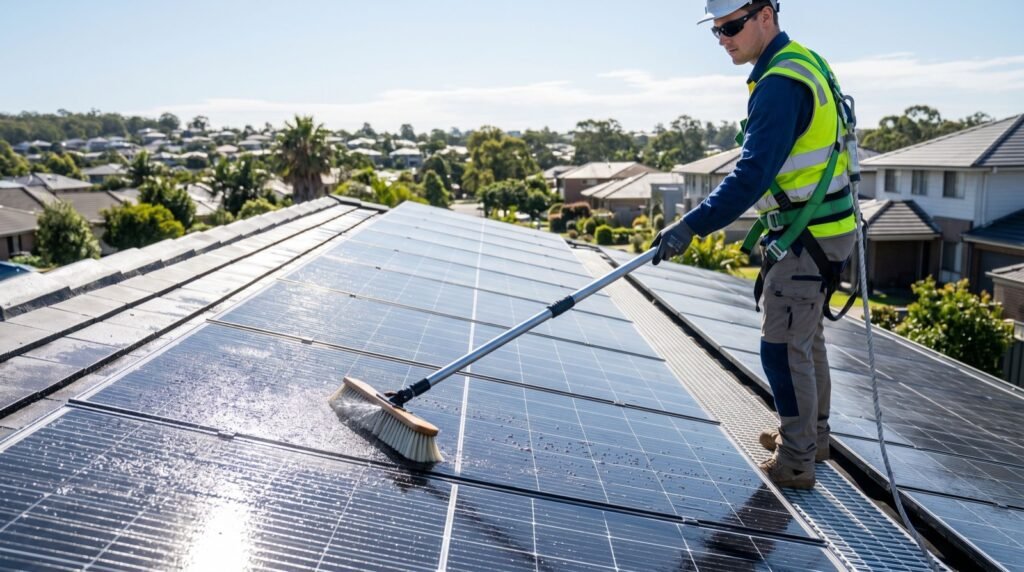
Dust on panels is the biggest silent loss in cities like Lahore and Multan. A thin layer of grime can cut output by 10 to 20 percent during the dry months. A quick rinse every few weeks restores that lost generation almost instantly.
- Clean panels with plain water early in the morning, never midday on hot glass.
- Check the monitoring app weekly for any string that underperforms its neighbours.
- Inspect connections and mounting bolts once a year before the monsoon.
- Service the inverter per the manufacturer’s schedule to protect the warranty.
A good installer leaves you with app-based monitoring so you can spot a fault the moment output drops rather than discovering it on an inflated bill. Treat the data like a dashboard, and your system will keep performing at its rated level year after year.
Seasonal checks that pay off
Before summer, confirm your inverter cooling fans are clear and the array is clean so you capture every peak-sun hour. Before the monsoon, check that cable glands and roof penetrations are sealed. These two short seasonal routines prevent the vast majority of real-world performance complaints.
Frequently Asked Questions
How much do solar installation services cost in Pakistan in 2026?
A fully installed on-grid 5kW system typically ranges from PKR 900,000 to 1,300,000 depending on panel brand and inverter. Hybrid systems with batteries cost more. Get itemised quotes so you can compare equipment, not just the headline price.
Do I need net metering to install solar?
No, but it is highly recommended for on-grid homes. Net metering lets you export surplus units and offset night-time usage, which dramatically shortens your payback period. Your installer files the application with your distribution company.
How long does a solar system last?
Quality panels last 25 to 30 years with gradual output decline. Inverters usually need replacement after 8 to 12 years. With basic cleaning and inspection, a well-installed system performs reliably for decades.
Can I add batteries later?
Yes, if you install a hybrid inverter from the start. It lets you bolt on lithium storage later without replacing core equipment, giving you backup during load-shedding when you are ready.
Conclusion
Great solar installation services in Pakistan combine accurate sizing, quality hardware, clean electrical work, and hassle-free net metering. Treat the installer as a long-term partner, not a one-time vendor, and read every warranty before you sign. Do that in 2026 and your rooftop will keep cutting your bills, and your reliance on the grid, for the next two decades.